

OUR VIDEOS GALLERY MEMBER SPONSORSHIP VENDOR SPONSORSHIP

User Tag List

Results 1 to 10 of 15

Thread: Charging An Auxiliary Battery..?

Threaded View

  1. #13
    Travelling Podologist Cuppa's Avatar
    Join Date
    Jan 2011
    Location
    Ballarat, Vic
    Posts
    6,806
    Thanks
    2,174
    Thanked 7,577 Times in 3,049 Posts
    Mentioned
    178 Post(s)
    Tagged
    0 Thread(s)
    Suggest for the sake of your battery that you set the battery protection setting on 'Hi'. 11.4v is into damage territory. (Portable fridge manufacturers are notorious for setting protection levels far too low, ARB are by no means alone in this).

    I'm not familiar with the Bosch C7 charger, but it appears to be a pretty fancy smart charger, & as such should be ok to leave connected to your crank batteries & switched on if you are leaving your fridge running. If it has a 'supply' mode, get the batteries fully charged & then switch to supply mode, if not just leave it in float mode. It will work out when to revert to bulk charging rates. If the latter just keep an eye on your crank batteries, assuming they are wet type batteries, & top them up with distilled water to ensure the plates remain covered. This is because they will be getting charged to 100% rather than to the usual 70% to 80% that alternator charging does. In so doing gassing & gradual fluid loss is normal.

    I have a couple of ARB fridges, including a 60 litre one, & know that the digital temperature readout can be misleading. This is not just an ARB fridge thing though. If you fill the fridge as much as you can with bottles of water or similar you can be more confident of the readout. I've found that with an empty or partially empty fridge it appears to get down to temperature rather quickly. If you have as little unused space as possible the internal temperature will remain more constant with less cycling of the compressor. When planning to use mine I usually fill the fridge (or freezer) with frozen bottles of water from our household freezer for 24 hours before refilling with food from the fridge or freezer to ensure a more stable temperature. This is far more efficient than using the 12v fridge/freezer to do the initial cooling/freezing.

    Cuppa

    2006 4.2TDi ex-Telstra Remote area Camper.
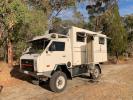
    Patrol Sold after 11 years of ownership Replaced with 2006 OKA NT Expedition Truck. Cummins, Allison & lots of goodies
    A Nomadic Life (Blog)

  2. The Following User Says Thank You to Cuppa For This Useful Post:

    Ade (16th July 2013)

Posting Permissions

  • You may not post new threads
  • You may not post replies
  • You may not post attachments
  • You may not edit your posts
  •